
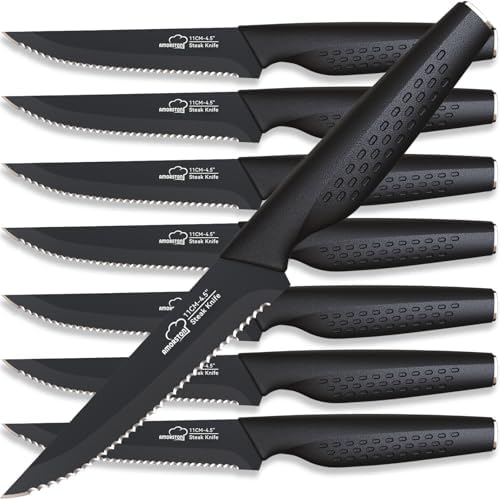
At the sink
Washing knives without dulling them
The sink is where edges go to die. Two minutes of habit saves a sharpening.
What the dishwasher actually does
21 of the 22 listings on our rack say dishwasher safe, and we repeat the listing word for word on every page. Safe means the knife survives; it does not mean the edge does. In the machine, a blade spends an hour rattling against the rack in hot detergent. None of that cuts anything, and all of it wears the fine edge that does.
Handles take their own beating. Heat cycles work on the joint between steel and grip, and a handle that loosens in year two usually learned the habit in the dishwasher.
The two-minute routine
Wash the knife first, before the pots, while the water is clean. Warm water, a soft sponge, edge pointed away from your palm. Rinse, then dry immediately with a towel; water that dries on its own leaves spots at best and, on high-carbon steel, worse than spots.
Then put it away sharp side up in nothing. Straight to the block or the insert, never into a wet sink to wait. Most kitchen cuts happen to a hand reaching into water it cannot see through.
Three habits that outlast any set
- Never soak a knife. Nothing on a blade needs more than a minute of contact time.
- Dry it before it leaves your hand. The towel is part of washing, not an extra step.
- Scrub with the spine leading, not the edge. The sponge lasts longer and so do you.
From the rack
Marked dishwasher safe on the listing
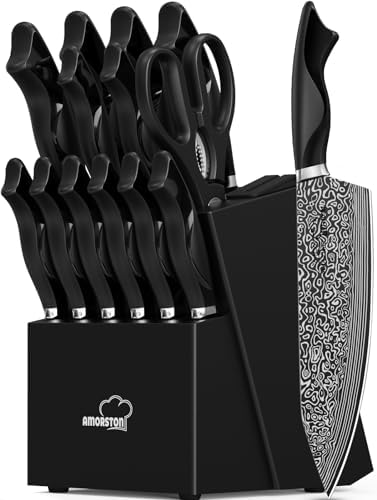
15-Piece Knife Set with Built-in Sharpener
15 pieces | German steel | with block
$39.99 ★★★★★4.6 2,684 ratings
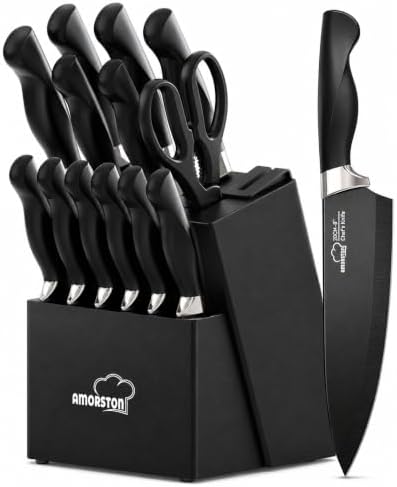
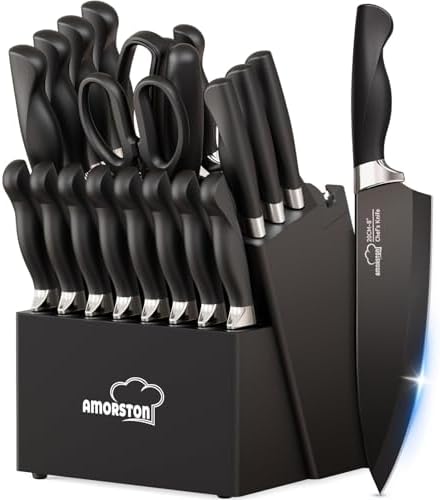
21-Piece Knife Set with Block and Sharpener
21 pieces | German steel | with block
$59.99 ★★★★★4.8 593 ratings
Keep reading
More from the bench
How many knives a kitchen actually needsThree do most of the work. The rest earn their slot one job at a time.A block on the counter, or a drawer?Where knives live decides how long they stay sharp. The block usually wins.The sharpener built into the block, explainedOne slot in the back does the upkeep. What it does well and where it stops.