
At the table
Setting the table for steak night
The board work is done. The last knife decision happens at the table.
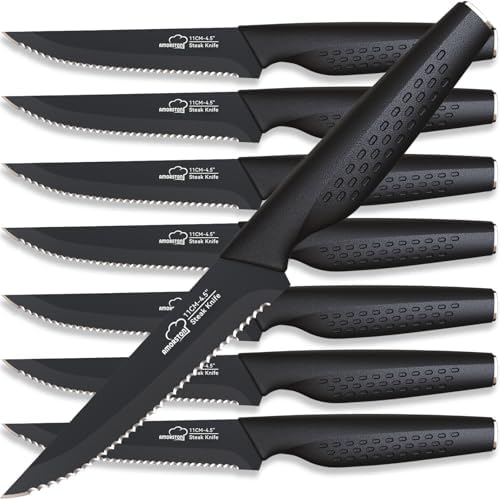
Why serrated wins the table
A table knife works under the worst conditions in the kitchen: a ceramic plate under the edge and a sideways sawing hand above it. A straight edge dulls against that plate in a season. Serrations keep cutting anyway, because the teeth touch the plate while the cutting bevels between them stay off it.
That is why our steak sets are serrated, and why they ask for almost no upkeep. No honing, no pull-through; wash, dry, and back in the drawer.
Why eight is the number
Our steak sets come eight to the box. Six covers the usual table; eight covers the table plus the two guests who always materialise when steak is on. Unlike board knives, table knives are all needed at the same moment, so the spare pair is not padding, it is the buffer that saves a mid-dinner wash.
The colour is the real choice
All three steak sets on our rack are the same eight-knife listing in different handle colours, which is why they share one pool of ratings. The steel, the serration and the count do not change; the table setting does. Black reads classic, cream white sits well with pale plates, pink argues with beige kitchens and wins.
- Match the handles to the plates you own, not the kitchen you plan.
- Count seats plus two. That is your set size.
- Steak knives in a bigger kit count toward its pieces; check the split before buying a separate set.
From the rack
Sets that cover the table
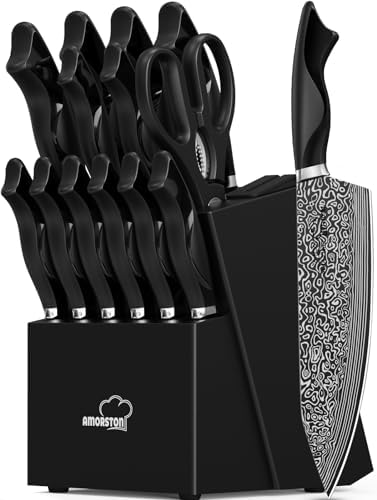
15-Piece Knife Set with Built-in Sharpener
15 pieces | German steel | with block
$39.99 ★★★★★4.6 2,684 ratings
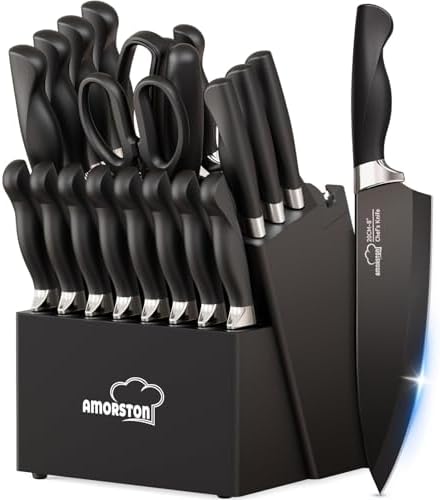
21-Piece Knife Set with Block and Sharpener
21 pieces | German steel | with block
$59.99 ★★★★★4.8 593 ratings
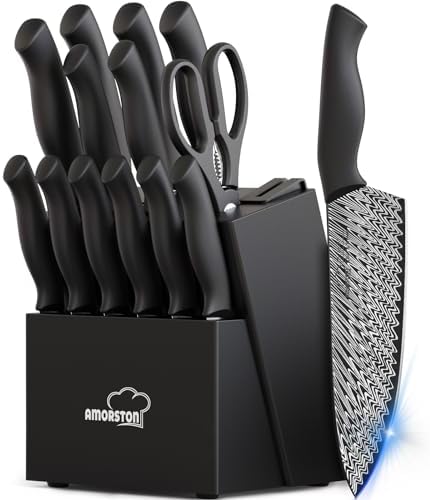
15-Piece Knife Set, High-Carbon German Steel
15 pieces | German steel | with block
$39.99 ★★★★★4.7 552 ratings
Keep reading
More from the bench
How many knives a kitchen actually needsThree do most of the work. The rest earn their slot one job at a time.A block on the counter, or a drawer?Where knives live decides how long they stay sharp. The block usually wins.Washing knives without dulling themThe sink is where edges go to die. Two minutes of habit saves a sharpening.